The most important aspect of planning is to provide enough space in the garden or pot for herbs, as they tend to flourish in organized environments. Since they can grow well under harsh conditions as well their growth increases under good conditions. For instance, Yarrow can spread over large areas, Chives get bushy and condensed and Lavender will spread all over. If they are given about a foot of space between each section, most will grow well. For instance, if you want your Chives to grow well, since they grow in a bunch, their roots will compete with neighboring plants for water and nutrients, if too close to them.
Since herbs require a lot of sunshine, sufficient space in and around them needs to be provided so that all parts get sufficient sunlight. Planting too many in clusters will prevent this from happening. You may even need to thin them if more growth than anticipated takes place.
Herbs do not require much preparation of the soil prior to planting. This however does not mean no preparation. A good assortment of herbs can be grown in compost or a mix of sandy loam and clay. Adequate drainage is to be provided for to prevent water logging, not advised for herbs. Since many herbs originate from the Mediterranean, they flourish in rocky and dry conditions with good drainage. All herbs do need to be watered to keep them moist but not soaking wet.
While for instance, Peppermint will require somewhat more water which can be provided by an automatic drip system, Lavender and Sage, just two to illustrate, can do with no watering at all. They do well with just the regular rainfall!
It will be a good idea to use some landscape fabric to keep weeds at bay. This will minimize the need to either root them out later or use herbicides. Herbicides incidentally may kill the weeds as well as the herbs as many are biologically similar. Spraying such chemicals may not be such a good idea, if you are planning on using some of these herbs in your food!
Insects rarely bother herbs. It would however be a good idea to be smart and use a diversion. Dill is an herb that attracts insects as a "trap crop". Such diversion will protect other plants such as tomatoes in the vicinity from the pests. If however, you wish to grow dill for itself, some use of insecticide will solve the problem.
Another area for proper planning is the timing of planting. Some herbs need to be planted immediately after the snow has melted, some at intervals of four weeks and some can be planted any time at all. Carefully planning this will make for a good garden.
Planned well, your herb garden will flourish with minimum care and effort.
Learn more about how to grow herbs successfully by visiting http://howtogrowherbs.net
Article Source: http://EzineArticles.com/?expert=Jillian_Lane
Showing posts with label Garden Tips. Show all posts
Showing posts with label Garden Tips. Show all posts
Thursday, May 8, 2008

Monday, September 17, 2007
Tips for growing an indoor garden
Successful decorating is about being clever with what you have, so try to see your indoor garden in a different light.
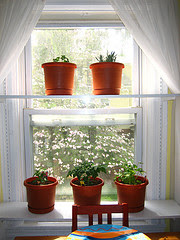
1 – Although certain plants do really well indoors, they still have the tendency to reach towards a light source. For instance, if your light source is towards the right side, all your plants would be inclined towards the right side in order to get sunlight. Its better to rotate your plants occasionally for them to grow straight
2 – During the summer time keep the plants out in sunlight to boost them up.
If your plants do not get their daily requirement of sunlight they might appear very thin and frail. Use artificial lights with a fluorescent lamp if your house has limited lights. If your home doesn’t get ample sunlight then buy plants that are appropriate for medium to low light environments. Rotate the plant after keeping it under light for a healthy growth.
3 – Make sure that the water is drained out of the bottom of the pot. The quantity and the intervals of watering vary. So before buying collect all the necessary information about its routine care. Make sure you use room temperature water. Although different plants have different watering needs but you can follow one thumb rule – Too much dryness and too much wetness are both bad for your plant. Make sure your containers and your soil have proper drainage.
4 – Bathe your plants occasionally. Often grime and dust tends to settle over the plant leaves and stem that is why it is important to bathe them. You can add a spray attachment to the nozzle of your hose pip and gently shower your plants.
5 – Like ample sunlight, plants require ample fresh air too. The plants tend to suffer a great deal if they are kept in smoky or stagnated air. Keep your doors and windows open and allow your plants to breathe fresh air.
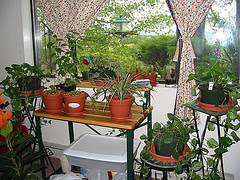
6 – Keep a check on your home temperature. Plants tend to grow well at a certain temperature i.e. 65-75 degrees at daytime and about 10 degrees lower at night.
7 – Keep a record of each of your plants’ name, species, purchase date, fertilizer dates, repotting dates etc just as you would maintain your child’s medical reports. It will help you to maintain your plants systematically.
8 – Fertilize your plants regularly. Every time we water, some of the soil’s essential nutrients get flushed out of the soil. You can use a liquid fertilizer and add it in small amounts when you water your plants. Although you can avoid fertilizing in winter. Keeping a track of your fertilization dates would help you. If you fertilize your plants too much or too often, you will end up burning your plants.
9 – Soil is an integral for a healthy plant. If you are growing your plants in a container, avoid using soil from the garden. It wont yield good results. Besides, it may also risk insects, weeds and other diseases to your indoor plants. You can buy good container soil from a plant nursery.
10 – Make sure your pots have proper drainage holes on their surface below. Most pots tend to be sold without drainage holes, but you should make holes on your pots yourself. With out proper drainage holes, the water in the soil tends to collect in the pot and damage the roots and your plant will almost certainly die.
Ten Indoor Gardening Tips

1 – Although certain plants do really well indoors, they still have the tendency to reach towards a light source. For instance, if your light source is towards the right side, all your plants would be inclined towards the right side in order to get sunlight. Its better to rotate your plants occasionally for them to grow straight
2 – During the summer time keep the plants out in sunlight to boost them up.
If your plants do not get their daily requirement of sunlight they might appear very thin and frail. Use artificial lights with a fluorescent lamp if your house has limited lights. If your home doesn’t get ample sunlight then buy plants that are appropriate for medium to low light environments. Rotate the plant after keeping it under light for a healthy growth.
3 – Make sure that the water is drained out of the bottom of the pot. The quantity and the intervals of watering vary. So before buying collect all the necessary information about its routine care. Make sure you use room temperature water. Although different plants have different watering needs but you can follow one thumb rule – Too much dryness and too much wetness are both bad for your plant. Make sure your containers and your soil have proper drainage.

4 – Bathe your plants occasionally. Often grime and dust tends to settle over the plant leaves and stem that is why it is important to bathe them. You can add a spray attachment to the nozzle of your hose pip and gently shower your plants.
5 – Like ample sunlight, plants require ample fresh air too. The plants tend to suffer a great deal if they are kept in smoky or stagnated air. Keep your doors and windows open and allow your plants to breathe fresh air.

6 – Keep a check on your home temperature. Plants tend to grow well at a certain temperature i.e. 65-75 degrees at daytime and about 10 degrees lower at night.
7 – Keep a record of each of your plants’ name, species, purchase date, fertilizer dates, repotting dates etc just as you would maintain your child’s medical reports. It will help you to maintain your plants systematically.
8 – Fertilize your plants regularly. Every time we water, some of the soil’s essential nutrients get flushed out of the soil. You can use a liquid fertilizer and add it in small amounts when you water your plants. Although you can avoid fertilizing in winter. Keeping a track of your fertilization dates would help you. If you fertilize your plants too much or too often, you will end up burning your plants.
9 – Soil is an integral for a healthy plant. If you are growing your plants in a container, avoid using soil from the garden. It wont yield good results. Besides, it may also risk insects, weeds and other diseases to your indoor plants. You can buy good container soil from a plant nursery.
10 – Make sure your pots have proper drainage holes on their surface below. Most pots tend to be sold without drainage holes, but you should make holes on your pots yourself. With out proper drainage holes, the water in the soil tends to collect in the pot and damage the roots and your plant will almost certainly die.
Ten Indoor Gardening Tips
Subscribe to:
Posts (Atom)